
The growing Internet of Things (IoT) market holds the promise of a connected world, but it comes with an environmental cost: billions of batteries discarded annually. Norwegian company ONiO is addressing this issue head-on with its revolutionary ONiO.zero microcontroller, which eliminates the need for batteries by harvesting energy from the environment.
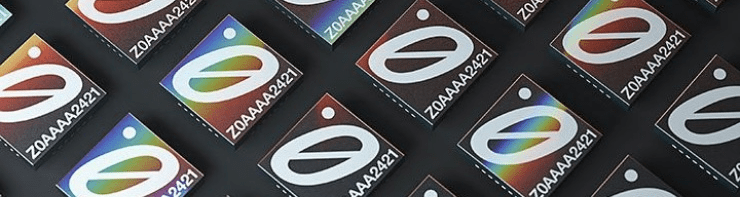
At Sofics, we are proud to support this groundbreaking innovation with our ultra-low leakage Electrostatic Discharge (ESD) protection technology. Together, we help shape a more sustainable IoT future by providing solutions that are both robust and energy-efficient.
ONiO’s Vision: A Battery-Free IoT Future
ONiO (https://www.onio.com), a visionary IoT solutions provider, aims to eliminate the environmental burden of battery-powered devices. Their ONiO.zero microcontroller (MCU) operates entirely on ambient energy sources like solar power, kinetic energy, thermal energy, radio frequency signals.
This MCU does not require any batteries, coin cells, or toxic components. With over 28 billion primary batteries ending up in landfills annually, ONiO.zero addresses this significant environmental problem and enables sustainable electronics that require minimal maintenance.
For applications like Electronic Shelf Labels (ESL) in retail stores, battery-free MCUs offer huge advantages. These electronic shelf labels can display dynamic pricing without needing batteries replaced regularly, saving costs and reducing waste.
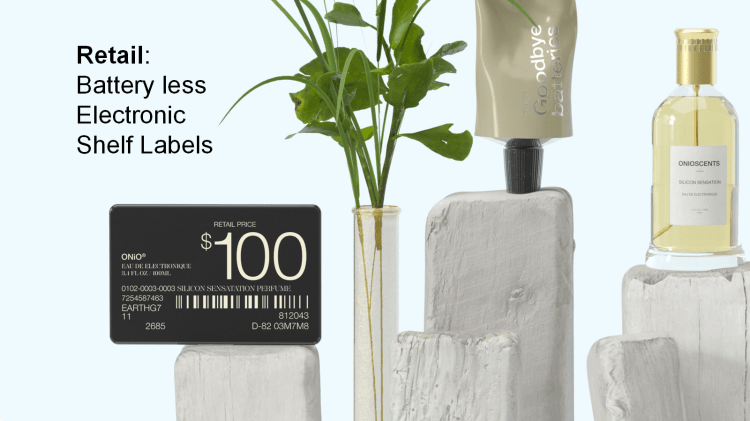
Similarly, battery-free remote controls for home devices eliminate the need to replace batteries, delivering convenience and environmental benefits.
The ONiO.zero chip is a leap toward sustainable electronics, providing ultra-low power operation and groundbreaking performance with energy harvesting. Only a few external components are required, depending on the selected energy harvesting technique.
The MCU can start from 1uW of energy, has the best sleep and active modes in the industry. It is fully user programmable based on a RISC-V architecture. The chip includes 2.4 GHz radio, PMIC, ADC and memory.
Development Partnerships
ONiO’s team had a clear “Run without batteries” goal from the start. A lot of the circuit innovation was handled internally to squeeze the power budget. A few key partnerships helped to meet the goal.
Value Chain Aggregator (VCA) Imec IC-link supported ONiO throughout the development. The Imec team supports hundreds of tape outs every year. They supported ONiO from the first steps to get access to the PDK, during MPW runs and with logistics support for the start of mass production.
TSMC was chosen as the wafer production partner. The foundry has a great selection of process geometries, excellent production quality, frequent MPW runs and volume capability. For the Zero chip the team liked the broad set of transistors with different thresholds. The selected process has an efficient e-fuse module and embedded non volatile memory (NVM). The ONiO team appreciated that the RF transistor models were correct up to 12 GHz. That was important for the wireless communication module. TSMC has a complete IP ecosystem for various building blocks. However, many of the digital and analog IP blocks the team investigated did not meet their quality standard…. except the IP from Sofics.
Sofics‘ IP exceeded the requirements from ONiO. Read about those further below.

The Role of Sofics: Ultra-Low Leakage ESD Protection
While ONiO.zero represents an innovation in ultra-low power microcontrollers, achieving battery-free operation required solving significant technical challenges. One critical challenge was designing ESD protection solutions that would not compromise energy efficiency.
Why ESD Protection Matters
Electrostatic Discharge (ESD) can damage integrated circuits (ICs) during manufacturing, handling, or usage. Robust ESD protection ensures reliable operation. However, traditional ESD protection devices often come with issues like high leakage current, a lot of parasitic capacitance and a large area. These compromises are unacceptable for a chip designed to function on ultra-low power.
Sofics’ Innovative ESD Solutions
At Sofics, we delivered cutting-edge low leakage ESD protection clamps for the ONiO.zero MCU. Key highlights of our solution include:
- Ultra-Low Leakage: Leakage current more than 100 times lower than conventional solutions.
- Minimal Capacitance: Optimized ESD cells with low shunt capacitance, essential for maintaining signal integrity in Bluetooth communication and RF interfaces.
- Compact Design: Solutions with an area footprint much smaller than ONiO’s requirements.
- High Robustness: Ensured ESD protection beyond 4kV HBM, providing reliability across various real-world applications.
These ESD protection solutions were implemented on a TSMC CMOS technology, leveraging our extensive experience in specialty I/O and ESD solutions for advanced semiconductor processes.
Synergistic Collaboration: Key Achievements
The partnership between Sofics and ONiO showcases the value of close collaboration in achieving innovative, sustainable solutions. Together, we accomplished the following for the ESD protection cells.
| Requirement | ONiO’s target | Sofics delivery |
| Leakage current | 10nA at 25°C | 50pA at 25°C |
| Parasitic capacitance | Ultra-low for RF interfaces | Fully optimized |
| Area | 95um x 50um | 30um x 50um |
| ESD robustness | >4kV HBM | Achieved beyond target |
Impact: Driving Sustainability in IoT
The ONiO.zero MCU powered by Sofics’ ESD protection technology offers immense benefits across IoT applications.
- Reduced Environmental Impact: By eliminating batteries, ONiO.zero prevents billions of batteries from ending up in landfills.
- Lower Costs: Reduces bill of materials and maintenance costs associated with battery replacement.
- Energy Efficiency: Minimal leakage currents enhance performance in active, sleep, and standby modes.
- Broad Application Potential: Suitable for energy-harvesting IoT devices like Electronics Shelf Labels (ESL), wearables, sensors, and remote controls.
Conclusion: Innovating for a Greener Future
The collaboration between Sofics and ONiO highlights how advanced semiconductor technologies can address global sustainability challenges. By delivering ultra-low leakage ESD protection solutions, Sofics enabled ONiO’s vision of a battery-free IoT future.
ONiO.zero represents a paradigm shift in microcontroller design, paving the way for energy-efficient, battery-free devices that reduce electronic waste and lower environmental impact. Together, we are contributing to a greener, more sustainable future—one innovation at a time. For more information about our solutions and collaboration opportunities connect with ONiO or Sofics.
FAQs
Q1: What is ESD protection, and why is it important for IoT devices? A: ESD protection safeguards integrated circuits from electrostatic discharge, which can damage or destroy sensitive components. It ensures reliable operation, especially in devices with robust power constraints like IoT.
Q2: How does ONiO.zero operate without batteries? A: ONiO.zero harnesses ambient energy from sources like solar, kinetic, or thermal energy to power IoT devices, eliminating the need for traditional batteries. There is a lot of innovation in energy harvesting techniques to deliver ever more power to the electronics, ONiO’s team focused on drastically reducing the required power to run the Zero Microcontroller chip.
Q3: Why is ultra-low leakage important for IoT devices? A: Ultra-low leakage minimizes power consumption, critical for energy-harvesting devices that operate on minimal energy sources.
Q4: What role does Sofics play in enabling ONiO.zero? A: Sofics provided ultra-low leakage ESD protection IP that ensured the reliability and energy efficiency of the ONiO.zero MCU.
Q5: What industries can benefit from ONiO.zero? A: Applications include retail (Electronic Shelf Labels), home electronics (battery-free remotes), wearables, sensors, and other energy-efficient IoT devices.
 Sofics - Solutions for ICs